Alur Orthopedic Implants
Choosing a leading joint replacement center in China involves more than comparing hospital rankings. It requires careful review of surgical experience, implant quality, infection control, rehabilitation support, and long-term follow-up. A strong hospital should explain its outcomes clearly, including complications, readmission rates, and patient recovery timelines. Marketing alone is not enough.
When is revision surgery needed? Surgeons may recommend revision after severe infection, implant loosening, repeated dislocation, fracture around the prosthesis, or significant wear. Persistent pain also matters, but pain does not automatically mean that revision is necessary. A loose component, bone loss, or infection must be investigated first. X-rays, blood tests, joint aspiration, and sometimes advanced imaging can help identify the cause.
The decision is personal. A patient who struggles to stand, hears new clicking, or feels the joint giving way may need prompt assessment. Yet revision surgery is usually more complex than the original replacement. It can involve longer surgery, weaker bone, greater blood-loss risk, and slower rehabilitation. Results vary between patients. Even experienced surgeons cannot promise a perfect outcome.
A reliable consultation should include the suspected failure mechanism, alternative treatments, implant options, expected mobility, and possible complications. Ask who will manage follow-up after returning home. Bring previous operation notes and imaging. Small details can change the plan.
Clear evidence matters. So does honest uncertainty. A second opinion may prevent an unnecessary operation.
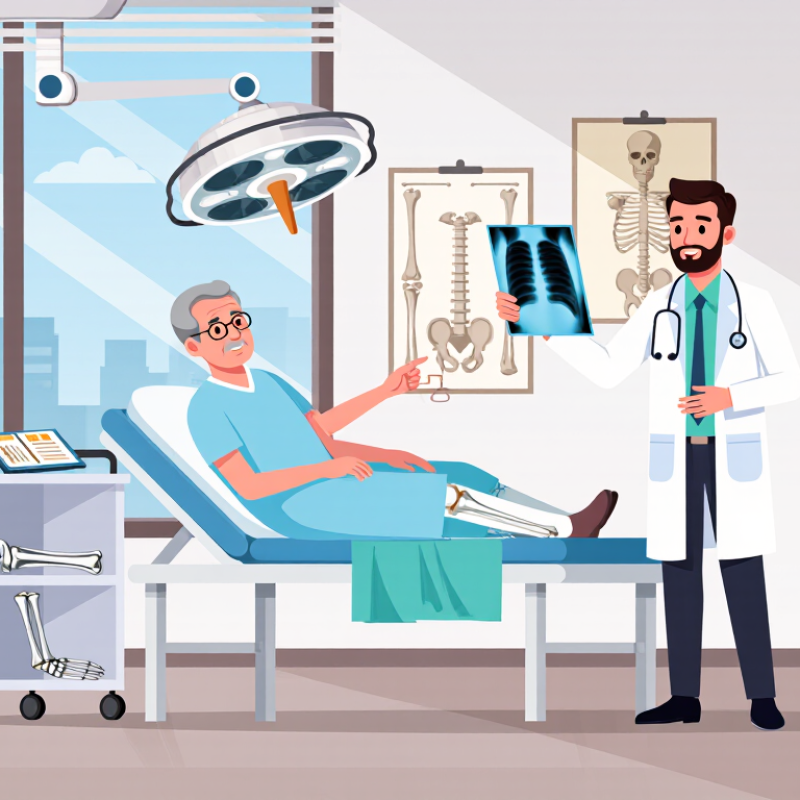
Joint replacement revision surgery is an operation to repair or replace an artificial joint that has failed, loosened, worn, or become painful. It may involve removing one component or the entire implant. It is not routine.
A surgeon may recommend revision after infection, repeated dislocation, a fracture near the implant, severe wear, or progressive bone loss. Persistent pain also needs careful investigation. Pain alone does not prove that revision is necessary. Doctors usually review medical history, examine movement, and order X-rays or other scans. Blood tests may help identify infection. In some cases, fluid is taken from the joint for laboratory testing.
Revision surgery is often more complex than the original replacement. Scar tissue can limit movement, and weakened bone may not hold new components securely. The operation may require bone graft material, specialized implants, or a temporary spacer when infection is suspected. Recovery can involve walking restrictions, physical therapy, and regular follow-up visits. Recovery timelines vary.
An experienced orthopedic team should explain the expected benefits, possible complications, and alternatives. These may include observation, targeted therapy, or treatment of an underlying infection. Patients should ask why revision is needed and what evidence supports the recommendation. Details matter. No checklist predicts every recovery. Even careful planning may need adjustment during surgery when bone quality or implant damage differs from the scans.
A joint replacement may need revision when the implant no longer functions safely or comfortably. Common causes include infection, loosening, instability, bone fracture, implant wear, and repeated dislocation. Pain alone is not proof of failure. A careful assessment is essential. Orthopedic teams usually review symptoms, walking ability, X-rays, blood tests, and sometimes joint-fluid samples. These steps help separate infection from mechanical problems, which can feel surprisingly similar.
Registry data show that revision risk varies widely. The Australian Orthopaedic Association National Joint Replacement Registry 2024 report indicates that many modern hip and knee replacements have roughly a 5% to 10% revision risk within ten years, depending on age, diagnosis, joint, and implant design. Younger, more active patients may face greater lifetime risk because their implants experience more years of use. Infection remains especially serious. It can appear early, or develop years after surgery. Not every painful replacement needs another operation. Some patients improve with targeted treatment, physical therapy, or activity changes. Others need partial or complete component replacement. Registry averages cannot predict one person perfectly. That limitation matters. A second opinion can be reasonable when the diagnosis remains unclear.
Revision surgery is not diagnosed from pain alone. A surgeon reviews when symptoms began, whether they followed a fall, and how walking has changed. Night pain, instability, swelling, clicking, or a shortened limb can suggest different problems.
Clinical examination checks movement, strength, leg alignment, skin condition, and tenderness. Standing X-rays may show loosening, bone loss, wear, or a fracture. However, early infection can look deceptively normal. Blood tests, including ESR and CRP, help screen for inflammation. If results remain concerning, joint aspiration can measure white-cell counts and provide cultures. The 2018 International Consensus Meeting recommends combining these findings rather than trusting one test.
CT may define bone defects or component rotation before complex revision planning. Nuclear imaging can support assessment, but it should not replace clinical judgment. The National Joint Registry’s 21st Annual Report indicates that many primary hip and knee replacements maintain approximately 95–97% survival at ten years, although age, diagnosis, implant design, and surgical factors change that risk. Therefore, a painful joint does not automatically require revision.
Some diagnoses remain uncertain. Cultures can be negative after previous antibiotics, and metal-related reactions may need specialized testing. A careful surgeon compares old and new images, reviews operative records, and seeks another expert opinion when evidence conflicts. That slower process is frustrating, but it can prevent an unnecessary second operation.
Revision joint replacement is more complex than the original operation. The 2024 American Joint Replacement Registry Annual Report analyzes more than three million hip and knee procedures. Its data show that infection, loosening, instability, and fractures remain important revision causes. The exact reason matters. It changes the surgical plan.
The process usually begins with a detailed review. Your surgeon examines pain patterns, walking ability, previous records, and imaging. Blood tests may check inflammation. Joint fluid testing can help identify infection. Sometimes, the answer remains uncertain. That is frustrating, but rushing can create greater risk. CT scans may show bone loss before surgery.
During revision surgery, the team removes damaged components carefully. They protect nearby bone and soft tissue. New implants may require longer stems, metal augments, bone graft, or special fixation. If infection is confirmed, treatment may involve removing the implants and placing a temporary spacer. The patient then receives targeted antibiotics, often for several weeks, before reimplantation is considered.
The National Joint Registry’s 21st Annual Report highlights how revision risk varies by age, joint, implant design, and surgical indication. This supports individualized planning rather than one standard method. Hospital stay, weight-bearing limits, and rehabilitation depend on bone quality and reconstruction complexity. Recovery can be slower than expected. Even experienced teams cannot remove every uncertainty. Ask about infection testing, blood-loss management, implant fixation, and the likely rehabilitation timeline before consenting.
| Topic | Typical Finding or Data | What It Means | Common Clinical Action |
|---|---|---|---|
| When Revision Surgery May Be Needed | |||
| Persistent or recurrent pain | Pain continues after the expected recovery period, worsens over time, or returns after a period of improvement. | Pain can result from loosening, infection, instability, fracture, wear, or problems outside the joint. Pain alone does not automatically mean revision is required. | The surgeon reviews the pain pattern, performs an examination, and orders targeted imaging and laboratory tests before recommending treatment. |
| Prosthesis loosening | New activity-related pain, progressive radiolucent lines, migration, subsidence, or a change in component position on imaging. | The implant may no longer be securely fixed to the bone. Loosening can occur with or without obvious trauma. | Revision may replace the loose component and address bone loss using bone graft or specialized fixation, depending on the defect. |
| Periprosthetic joint infection | Possible signs include increasing pain, drainage, redness, fever, wound problems, or elevated inflammatory markers. Some infections have few symptoms. | Infection can develop early or years after joint replacement and requires a structured diagnostic assessment. | Treatment may involve antibiotics, surgical washout with component retention, or one-stage or two-stage revision. The choice depends on timing, bacteria, implant stability, and bone and soft-tissue condition. |
| Recurrent dislocation or instability | Repeated dislocation, a feeling that the joint is giving way, or the need for repeated reduction. | Instability may be related to component position, soft-tissue imbalance, muscle weakness, trauma, or spinal and pelvic alignment. | Non-surgical measures may be tried first. Revision can correct component alignment, improve stability, or repair deficient soft tissues when appropriate. |
| Fracture around the implant | Sudden pain, swelling, bruising, deformity, or inability to bear weight after a fall or other injury. | The fracture pattern and the stability of the existing implant determine whether fixation alone or revision is needed. | Urgent imaging is required. Treatment may include internal fixation, implant revision, or both, followed by a protected rehabilitation plan. |
| Wear, osteolysis, or implant failure | Particle wear, bone loss, damaged components, or mechanical failure identified by symptoms, X-rays, CT, or other tests. | Progressive bone loss can make future surgery more complex, even when symptoms are initially mild. | The surgeon weighs symptoms, imaging progression, implant stability, bone quality, and overall health before deciding on observation or revision. |
| Typical Revision Surgery Process | |||
| 1. Clinical assessment | Review of symptoms, previous operation records, implant details, medications, allergies, and medical conditions. | Revision surgery is planned according to the cause of failure rather than the symptoms alone. | The surgeon examines joint stability, gait, range of motion, skin condition, leg length, and surrounding muscles and nerves. |
| 2. Diagnostic testing | Common tests include standing X-rays, blood tests such as C-reactive protein and erythrocyte sedimentation rate, and joint aspiration when infection is suspected. | CT, ultrasound, nuclear imaging, or other tests may be added when standard assessment does not explain the problem. | The team identifies infection, implant position, bone defects, soft-tissue problems, and the condition of the existing components. |
| 3. Preoperative preparation | Assessment may include heart and lung evaluation, medication review, nutritional status, dental or infection screening when appropriate, and blood management planning. | Revision procedures are often more complex than primary replacements and may involve greater blood loss and a longer recovery. | The patient receives an individualized surgical plan, risk discussion, anesthesia evaluation, and instructions for arranging support at home. |
| 4. Removal of failed components | The surgeon exposes the joint and removes some or all of the previous components, depending on which parts are loose, infected, worn, or damaged. | Well-fixed implants may require careful extraction to preserve as much bone as possible. | Tissue and fluid samples are commonly collected during surgery when infection is possible. |
| 5. Bone and soft-tissue reconstruction | Bone defects may be classified by their location and severity; treatment can include bone graft, metal augments, sleeves, cones, or revision stems. | The reconstruction is selected to restore stability, alignment, leg length, and load transfer. | The exact method depends on bone quality, the joint involved, implant stability, infection status, and the surgeon’s intraoperative findings. |
| 6. Placement and stability testing | New components are positioned and tested for fixation, range of motion, stability, alignment, and leg-length balance. | Additional components or a constrained design may be considered when soft-tissue support is inadequate. | The wound is closed after final checks, and postoperative imaging may be obtained to confirm alignment and component position. |
| 7. Early postoperative care | Care commonly includes pain control, wound monitoring, blood-clot prevention, early mobilization, and physical therapy. | Weight-bearing limits and movement precautions vary according to bone reconstruction, fixation, soft-tissue repair, and the joint replaced. | The care team monitors infection, bleeding, blood clots, nerve or blood-vessel problems, dislocation, and wound healing. |
| 8. Rehabilitation and follow-up | Recovery is highly individual; revision rehabilitation commonly takes longer than recovery from the original replacement. | Progress depends on bone reconstruction, muscle strength, infection treatment, general health, and adherence to precautions. | Follow-up visits and imaging assess wound healing, component position, function, pain, and progress toward safe daily activities. |
| Important Decision Factors | |||
| Observation versus revision | Not every painful or abnormal joint replacement requires immediate revision. | The decision considers symptom severity, functional limitation, implant failure, infection risk, imaging changes, and the risks of delaying treatment. | A qualified orthopedic surgeon should make the decision after a complete assessment and, when necessary, consultation with infection, anesthesia, or rehabilitation specialists. |
| Seek urgent medical attention | Urgent symptoms include a suspected dislocation or fracture, sudden inability to bear weight, uncontrolled wound drainage, rapidly increasing swelling, chest pain, or shortness of breath. | These symptoms may indicate a serious orthopedic, infectious, bleeding, or clot-related complication. | Contact the treating hospital or emergency service promptly rather than waiting for a routine appointment. |
Note: Revision surgery is individualized. The indications, tests, implant choices, hospital stay, weight-bearing restrictions, and rehabilitation schedule may differ according to the joint involved, the cause of failure, bone quality, infection status, and the patient’s overall health.
Recovery after revision joint replacement often takes longer than recovery after the first operation. The surgeon may have repaired bone loss, replaced worn components, or treated scar tissue. These details shape the rehabilitation plan. Patients usually begin with a walker, short indoor walks, and gentle exercises guided by a physical therapist. Pain should gradually improve, but discomfort may return after increased activity.
A practical home setup matters. Remove loose rugs, place commonly used items within reach, and use a raised toilet seat if recommended. Keep the incision clean and dry. Protein-rich meals, adequate fluids, and prescribed medicines support healing. Smoking can delay recovery. Follow weight-bearing limits carefully, even when the joint feels stronger.
Progress is rarely perfectly linear. A busy day may cause swelling the next morning. That does not always mean the implant has failed, but it deserves attention. Many patients try to advance too quickly; this is an understandable mistake. Contact the medical team for increasing redness, drainage, fever, calf pain, chest pain, or sudden loss of movement. Follow-up imaging helps confirm that the revised joint remains stable. Recovery may require patience, repeated adjustments, and honest communication about pain, sleep, mood, and daily function.
Revision surgery may be considered for persistent infection, implant loosening or wear, instability or repeated dislocation, periprosthetic fracture, or severe pain and loss of function after the original replacement.
Recovery after revision joint replacement is often slower than recovery after a first replacement. Patients commonly begin walking with assistance during the first 1–2 weeks, focus on wound healing and range of motion during the first 4–6 weeks, and continue rebuilding strength and function for several months. These timeframes are approximate; the surgeon’s rehabilitation plan should take priority.
It repairs or replaces a failed artificial joint. A surgeon may remove one part or the entire implant. It is not routine.
Possible causes include infection, loosening, severe wear, fracture, bone loss, or repeated dislocation. Persistent pain needs investigation. Pain alone does not prove implant failure.
Doctors review symptoms, medical history, movement, walking ability, and previous treatment. X-rays and other scans can reveal damage. Blood tests or joint-fluid testing may check for infection.
Often, yes. Scar tissue can restrict movement, and weakened bone may not hold new components securely. Surgery may require bone graft material or specialized implants. Plans can change.
No. Some patients improve with targeted therapy, activity changes, or infection treatment. A second opinion may help when the diagnosis remains unclear. Do not rush.
Recovery often takes longer than recovery after the first operation. Patients may begin with a walker, short indoor walks, and gentle exercises. Weight-bearing limits matter.
Remove loose rugs and keep daily items within easy reach. A raised toilet seat may help. Keep the incision clean and dry.
Contact the medical team for increasing redness, wound drainage, fever, calf pain, or chest pain. Sudden loss of movement also needs prompt attention. Small changes matter.
No. A busy day may cause swelling the next morning. That does not always mean failure, but it deserves attention. Progress can be uneven.
Joint replacement revision surgery is a procedure performed to repair or replace an artificial joint that is no longer functioning properly. When is revision surgery needed? It may be considered when an implant becomes loose, worn, unstable, infected, damaged, or painful, or when the surrounding bone and soft tissue can no longer support normal joint movement. Doctors determine the need through a detailed review of symptoms, physical examinations, imaging tests, and sometimes laboratory analysis to identify infection or bone loss.
During revision surgery, the surgeon removes part or all of the previous implant, treats any damaged tissue or infection, and places replacement components designed to restore joint stability and function. Because revision procedures can be more complex than the original operation, recovery may require careful pain management, physical therapy, walking support, and gradual increases in activity. Regular follow-up appointments help monitor healing, mobility, and the long-term condition of the revised joint.
