How are ACL and PCL injuries treated with implants is not answered by one device or one surgical technique. Treatment depends on ligament damage, knee stability, activity goals, age, and associated meniscus or cartilage injuries. The American Academy of Orthopaedic Surgeons reports that ACL injuries affect roughly 100,000 to 200,000 people annually in the United States. PCL injuries are less common and are frequently linked to high-energy trauma, such as dashboard impact during a collision.
In reconstruction, surgeons usually replace the damaged ligament with an autograft, allograft, or selected tendon tissue. Implants help secure that graft inside bone tunnels. Common options include interference screws, cortical buttons, adjustable-loop devices, and suture anchors. The Swedish National Knee Ligament Registry and Norwegian Knee Ligament Registry show why follow-up matters: revision risk, return-to-sport rates, and patient-reported outcomes can vary between techniques and patient groups. Hardware alone cannot restore normal movement.
“The knee is not a simple hinge joint,” orthopedic surgeon Freddie Fu repeatedly emphasized when describing its complex, three-dimensional anatomy. That principle remains important for ACL and PCL reconstruction. Surgeons must recreate ligament position, tension, and rotational control, not merely attach a graft. The American Academy of Orthopaedic Surgeons’ clinical guidance also supports individualized decision-making, especially when associated injuries exist.
Recovery is gradual. A patient may leave surgery with small scars, hinged bracing, and crutches, but biological healing continues for months. No implant guarantees stability. Evidence is improving, yet some comparisons remain imperfect. Understanding implant materials, fixation strength, surgical experience, rehabilitation, and realistic expectations is essential before treatment decisions are made.
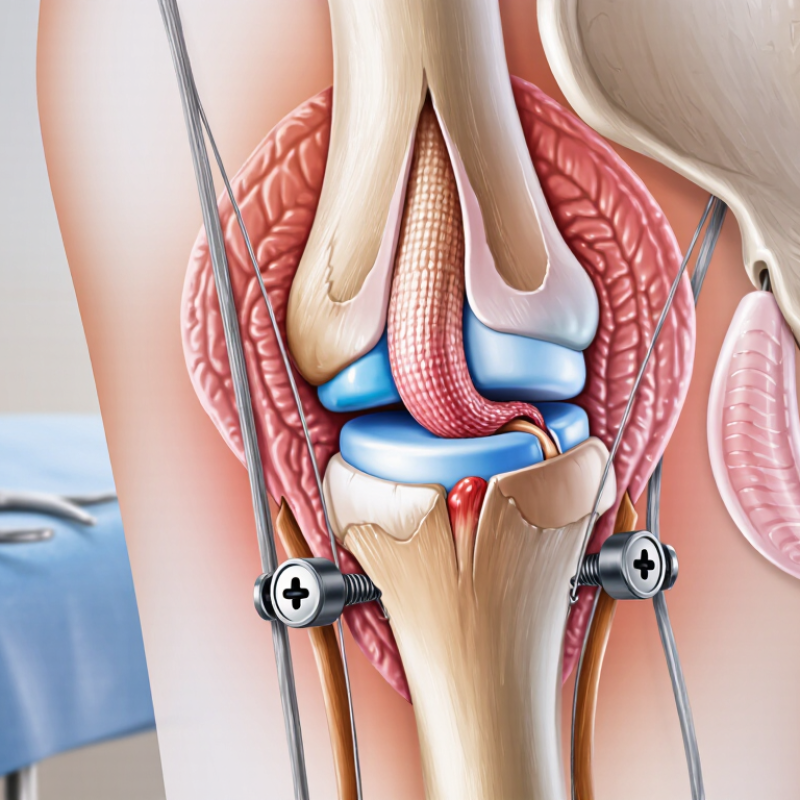
Understanding ACL and PCL Injuries and Implant Treatment Goals
ACL and PCL injuries affect the knee’s stability in different ways.
The ACL limits forward movement and twisting of the shinbone. The PCL controls backward movement. A torn ligament may cause buckling, swelling, or difficulty turning. However, pain alone cannot show the complete injury. Doctors usually combine a physical examination with imaging and activity history.
Implant treatment often supports ligament reconstruction rather than replacing the entire knee.
A surgeon may use a tendon graft and secure it inside carefully positioned bone tunnels. Small fixation devices, such as screws or cortical buttons, hold the graft while it heals. The main goals are stability, accurate alignment, and protection of the graft during early recovery. PCL surgery can require different positioning and rehabilitation because its forces differ from those affecting the ACL.
An implant is only one part of the treatment.
Muscle control, gradual movement, and supervised rehabilitation also shape the result. No device can restore normal function instantly. Recovery may feel uneven, especially when swelling limits exercise. That matters. It should be reported, not ignored. Implant choice depends on bone quality, tear pattern, age, work, and sporting demands. Patients should ask how long healing may take and what warning signs require review. Even a technically successful operation can disappoint when expectations are unrealistic or rehabilitation is rushed. Careful follow-up helps identify stiffness, instability, infection, or graft problems before they become harder to manage.
Assessing Knee Damage Before Choosing an Implant-Based Procedure
Before choosing an implant-based procedure, surgeons must define the injury, not simply confirm a torn ligament. They examine knee laxity with Lachman and posterior drawer tests. They also compare both knees during movement. MRI can show ACL or PCL disruption, meniscus damage, cartilage loss, and bone bruising. Standing X-rays reveal alignment and hidden arthritis. The difficult part is admitting that a clear MRI can still mislead.
The American Academy of Orthopaedic Surgeons’ 2022 guideline supports MRI as a useful diagnostic tool for ACL injuries, but clinical findings remain essential. Implant selection may involve fixation devices, bone tunnels, or reconstruction materials. The choice depends on activity level, tissue quality, skeletal maturity, alignment, and combined ligament damage. A recreational runner with isolated ACL instability may need a different plan from a patient with chronic PCL deficiency and cartilage wear.
Registry evidence adds another layer. The 2024 American Joint Replacement Registry Annual Report tracks more than three million hip and knee procedures, demonstrating the value of long-term implant surveillance. However, these registries mainly describe joint replacement, not every ligament reconstruction. That limitation matters. Surgeons should discuss expected stability, infection risk, stiffness, revision risk, and rehabilitation demands before surgery. Sometimes the safest implant is no implant. A careful examination may support structured rehabilitation instead. Patient goals should influence the decision, but they should not replace objective measurements.
Using Grafts, Fixation Devices, and Implants in Ligament Reconstruction
How Are ACL and PCL Injuries Treated With Implants?
ACL and PCL reconstruction often uses a graft instead of a repaired ligament. The graft may come from the patient’s tendon or donated tissue. It acts as a scaffold while new tissue develops. Implants hold the graft inside bone tunnels. They do not instantly restore normal stability.
Common fixation devices include interference screws, cortical buttons, and suture-based anchors. Interference screws press the graft against the tunnel wall. Cortical buttons secure the graft on the outer bone surface. Some PCL procedures need additional fixation because the ligament follows a steeper path through the knee. The surgeon selects the device after assessing bone quality, tunnel position, graft size, and activity goals. Small details matter.
Implant choice is only one part of treatment. Accurate tunnel placement, balanced tension, and careful rehabilitation also influence the result. A poorly positioned graft can remain unstable, even with strong fixation. That is an uncomfortable limitation. No implant removes surgical risk. Possible concerns include irritation, tunnel widening, infection, stiffness, or graft failure. These problems are uncommon, but they require honest discussion. Follow-up examinations and imaging help confirm healing and identify changes early. Recovery is usually gradual, with protected movement and progressive strengthening guided by a qualified orthopedic team. Pain levels and healing speed vary widely. Some patients improve steadily; others need more time.
Managing Recovery, Rehabilitation, and Implant-Related Follow-Up
ACL and PCL implants support ligament reconstruction, but healing depends on more than fixation. Surgeons may use interference screws, cortical buttons, or other fixation devices to secure the graft. The 2022 American Academy of Orthopaedic Surgeons guideline supports early, structured rehabilitation after ACL reconstruction. It also stresses individualized decisions based on injury pattern, age, activity, and associated damage.
Recovery should be measured by function, not calendar dates. Early sessions often focus on reducing swelling, restoring knee extension, and activating the quadriceps. Later work adds balance, landing control, hamstring strength, and sport-specific drills. The Swedish National Knee Ligament Registry has recorded more than 50,000 ACL reconstructions, showing that revision remains an important long-term outcome. Registry analyses generally place early revision risk in the low single digits, although younger athletes face higher risks.
Follow-up should include wound checks, stability testing, and review of pain around the implant. Persistent locking, warmth, drainage, or sudden instability needs prompt clinical assessment. Imaging may help identify tunnel changes, graft failure, or hardware irritation. PCL recovery can be slower, and bracing may continue longer. Evidence is improving, but not complete. Return-to-sport testing can still miss poor movement habits. Patients and clinicians should reassess progress honestly, even when the knee feels “almost normal.”
How Are ACL and PCL Injuries Treated With Implants? - Managing Recovery, Rehabilitation, and Implant-Related Follow-Up
| Topic |
ACL Injury |
PCL Injury |
Implant and Follow-Up Considerations |
| When surgery may be considered |
Reconstruction may be considered for persistent instability, a high demand for pivoting activities, or associated injuries. Some people can be managed without surgery, depending on symptoms and activity goals. |
Many isolated PCL injuries are initially treated without surgery. Reconstruction may be considered for severe or combined injuries, ongoing instability, or symptoms that persist despite rehabilitation. |
The treatment decision depends on the injury pattern, examination and imaging findings, activity goals, and the patient’s overall health. Surgery is not required for every ligament injury. |
| What “implant” can mean |
Reconstruction usually uses a tendon graft to replace the injured ligament. Fixation devices, such as screws, buttons, or other anchors, may secure the graft to bone. |
Reconstruction also uses a tendon graft secured to bone with fixation devices. The surgical technique and fixation method vary with the injury and surgeon’s plan. |
Fixation devices hold the graft while it heals; they do not function as a knee-joint replacement. Device materials and whether any hardware might later be removed depend on the case. |
| Early recovery |
Rehabilitation commonly begins soon after surgery, with swelling control, knee motion, and quadriceps activation. Weight-bearing and brace instructions depend on the procedure and any additional injuries. |
Early rehabilitation often protects the healing PCL from forces that pull the shinbone backward. A brace that supports the shinbone may be prescribed, along with individualized limits on motion and weight-bearing. |
Follow the surgeon’s written instructions for brace use, walking aids, wound care, and activity. Meniscus, cartilage, or other ligament procedures can change the recovery plan. |
| Rehabilitation focus |
Progressive work commonly addresses motion, strength, balance, control of the leg, and eventually running and sport-specific movements. |
Rehabilitation emphasizes protection of the PCL while gradually restoring motion and strength. The timing and type of hamstring and quadriceps exercises may differ from an ACL program. |
Progression should be based on the treating team’s protocol and functional milestones, not on a timeline alone. Avoid exercises or activities that have not yet been cleared. |
| Return to sport and demanding activity |
Return is gradual and based on strength, movement quality, knee stability, confidence, and sport-specific testing. It commonly takes many months after reconstruction. |
Return is also criterion-based and may take many months, particularly after reconstruction. The treating team should assess stability, strength, and sport-specific readiness. |
There is no single safe return date for everyone. Returning too soon can increase the risk of reinjury or graft problems; clearance should come from the clinical team. |
| Implant-related follow-up |
Follow-up visits assess healing, motion, strength, stability, and progress through rehabilitation. Imaging may be used when clinically indicated. |
Follow-up evaluates PCL stability, knee function, and rehabilitation progress. Imaging may be considered if symptoms or examination findings warrant it. |
Implants are not routinely removed simply because recovery is complete. Removal may be considered if a device causes a specific problem, after assessment by the surgeon. |
| Contact the care team |
Seek prompt medical advice for a wound that becomes increasingly red or drains, fever, worsening pain or swelling, new calf pain or swelling, sudden loss of function, or a new injury. |
Urgent symptoms such as chest pain or sudden shortness of breath require emergency care. Do not attempt to adjust or remove fixation devices yourself. |
Important: Recovery and rehabilitation plans vary by injury severity, surgical technique, graft choice, other knee procedures, and individual progress. This table is general information and does not replace advice from an orthopedic surgeon or physical therapist.
Evaluating Outcomes, Risks, and Long-Term Knee Function
How Are ACL and PCL Injuries Treated With Implants?
ACL and PCL injuries may require reconstruction when instability affects walking, work, or sports. Surgeons usually use a tendon graft to replace the damaged ligament. Small implants secure the graft inside bone tunnels. These devices may include screws, buttons, or other fixation systems. The choice depends on the injury, bone quality, age, and surgical plan. It is not a universal solution.
Early outcomes can include improved stability and reduced episodes of the knee giving way. However, pain, stiffness, infection, blood clots, or graft failure remain possible risks. Some patients regain confident movement within months, while others need longer rehabilitation. Long-term knee function depends on graft healing, muscle strength, movement control, and joint cartilage health. An implant can hold the graft, but it cannot restore every part of a healthy knee. Recovery is not linear. This matters.
Tips: Ask how the implant will be fixed and why it suits your anatomy. Confirm the rehabilitation schedule before surgery. Report increasing warmth, drainage, fever, or sudden calf pain quickly. Attend follow-up visits, even when the knee feels better. A careful return to running or pivoting sports may reduce reinjury risk. Still, timelines vary, and some advice may need revision after imaging or clinical examination. Decisions should come from a qualified orthopedic professional who reviews your symptoms, scans, and goals.
How Are ACL and PCL Injuries Treated With Implants?
Evaluating outcomes, risks, and long-term knee function after ligament reconstruction.
ACL reconstruction generally shows higher return-to-sport rates, while PCL reconstruction may involve a slower recovery and more variable functional results. Reported graft failure and post-traumatic osteoarthritis rates vary substantially according to injury complexity, associated meniscal damage, rehabilitation, and follow-up duration.
Values shown are evidence-informed approximate midpoints of ranges commonly reported in peer-reviewed clinical reviews: return to sport, 65–85% for ACL and 50–75% for PCL; graft failure, 3–7% for ACL and 4–10% for PCL; radiographic osteoarthritis at approximately 10 years, 20–30% after ACL and 20–50% after PCL reconstruction. Results are not directly comparable across all studies.
FAQS
A graft replaces the damaged ligament and provides a scaffold for new tissue. It may come from your tendon or donated tissue. Healing takes time.
Interference screws press the graft against the bone tunnel wall. Cortical buttons secure it on the outer bone surface. Suture anchors may provide additional support.
The decision depends on bone quality, tunnel position, graft size, and activity goals. PCL surgery may need extra fixation because its path is steeper. Small details matter.
No. The implant holds the graft while healing develops. Tunnel placement, graft tension, and rehabilitation also affect stability.
Possible concerns include stiffness, irritation, infection, tunnel widening, or graft failure. These problems are uncommon but should be discussed honestly. No device removes surgical risk.
Early exercises reduce swelling, restore knee extension, and activate the quadriceps. Later sessions add balance, landing control, and hamstring strengthening. Progress can feel uneven.
Function matters more than calendar dates. Clinicians assess strength, movement control, stability, and daily activities. A knee that feels almost normal may still move poorly.
Seek prompt assessment for persistent locking, warmth, drainage, or sudden instability. Follow-up may include wound checks, stability tests, and imaging. Waiting can complicate the picture.
PCL recovery may take longer, and bracing can continue for more time. The exact schedule varies with injury severity and associated damage. There is no perfect timetable.
Return should follow strength and movement testing, not only elapsed months. Sport-specific drills can reveal weak landing habits. Testing is useful, but it can still miss problems.
Conclusion
How are ACL and PCL injuries treated with implants depends on the severity of the tear, knee stability, activity level, and the condition of surrounding tissues. Treatment typically begins with imaging and a physical examination to assess ligament damage, cartilage, bone, and alignment. When reconstruction is needed, a graft is used to replace the damaged ligament, while fixation devices or other implantable components help secure the graft inside bone tunnels. The selected approach is tailored to the patient’s anatomy and the specific injury pattern.
Recovery involves protecting the reconstructed ligament, gradually restoring movement, and following a structured rehabilitation program to rebuild strength, balance, and coordination. Follow-up visits help monitor healing, implant position, knee stability, and possible complications such as stiffness, infection, or graft failure. With appropriate surgical planning, rehabilitation, and long-term monitoring, many patients can achieve improved knee function and return to daily activities or sports, although recovery time and outcomes vary from person to person.
 Alur Orthopedic Implants
